Hello, welcome to the website of Shanghai HESON Instrument Technology Co., LTD.!


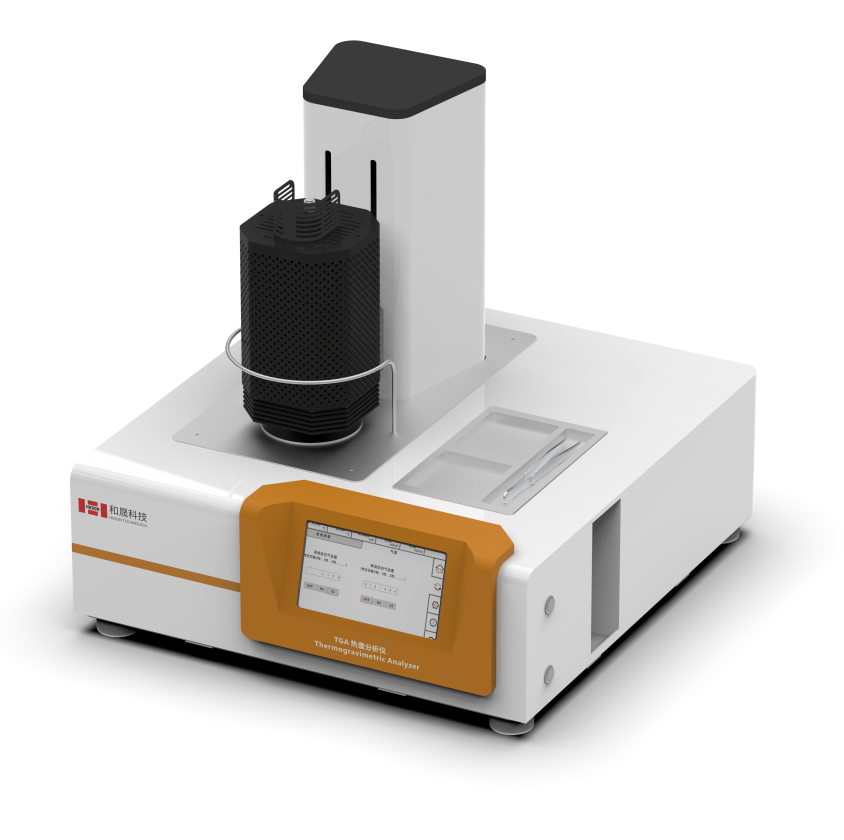
Thermogravimetric analyzer with lifting function
Product Description:HESON Instrument to provide you with thermogravimetric analyzer manufacturer, price, model, brand, quotation and other parameter information, the company has a professional service team, to provide you with perfect technical support, is your trusted partner.
Product Model
Manufacturer Type
Manufacturing
Update Time
2023-08-24 08:56:00
Visits
1000
HS-TGA-301 Thermogravimetric analysis (TG, TGA) involves observing the change in sample mass with temperature or time during heating, isothermal holding, or cooling, with the aim of studying the thermal stability and composition of materials. It is widely used in research and development, process optimization, and quality monitoring in various fields such as plastics, rubber, coatings, pharmaceuticals, catalysts, inorganic materials, metallic materials, and composite materials。

The primary characteristic of thermogravimetric analysis is its strong quantification ability, which enables accurate measurement of mass changes and their rates in substances. Based on this characteristic, it can be said that as long as a substance undergoes a mass change when heated, it can be studied using thermogravimetric analysis. Thermogravimetric analysis can be used to detect both physical and chemical change processes. It is evident that these physical and chemical changes all involve mass changes, such as sublimation, vaporization, adsorption, desorption, absorption, and gas-solid reactions。
Product Features
1. The heating element of the furnace body is made of double-row wound noble metal nickel-chromium alloy wire, which reduces interference and is more resistant to high temperatures.
2. The tray sensor is crafted from precious metal nickel-chromium alloy, boasting advantages such as high temperature resistance, oxidation resistance, and corrosion resistance.
3. The power supply and circulating cooling system are separated from the main unit to minimize the impact of heat and vibration on the micro-thermal balance.
4. It adopts an upper-opening structure, making operation convenient. However, the operation of moving the furnace body upward to place samples is difficult and prone to damage the sample rod.
5. The host machine employs a water-based thermostat to isolate the heating furnace from the thermal impact on the chassis and micro-thermal balance.
6. Equipped with a 32-bit ARM processor featuring the Cortex-M3 core, it boasts faster sampling and processing speeds.
7. 24-bit four-channel sampling AD collects DSC signals, TG signals, and temperature T signals.
8. The furnace body can be replaced according to customer requirements.
9. The furnace chamber can be automatically and manually raised and lowered.
10. Can be used in conjunction with infrared spectrometer
Technical Specifications:
structural design | Sample loading at the vertical top |
Maximum Sample Size | 5g |
Balance resolution | 1ug |
temperature range | RT—1100℃ |
temperature accuracy | 0.1℃ |
Test the atmosphere | Inertness, oxidation, static state, and dynamic state |
heating rate | 0—100℃/min |
Balance Calibration | Built-in ring weight 2, automated program |
crucible | Pt, Al2O3, Au, SiO2, Ag, ZrO2, Al |
Blank curve reproducibility | ±10μg over the entire temperature range |
cooling method | water cooling |
Introduction to Thermogravimetric Analyzer-Infrared Coupling

The thermogravimetric analyzer-infrared spectrometer combined system (hereinafter referred to as TG-IR combined system) utilizes a purge gas (usually nitrogen or air) to introduce volatile or decomposed products generated during the thermogravimetric process into a heated gas cell (typically at 200-230°C) within an infrared sample chamber through a connecting tube maintained at a constant high temperature (typically 200-230°C). The infrared spectrometer then detects and analyzes the structure of the escaping gas components. This technology has been widely applied in the study of thermal stability and thermal decomposition mechanisms of various organic and inorganic materials, as it addresses the limitation of thermogravimetric analysis, which can only provide information on thermal decomposition temperature and weight loss percentage but cannot precisely identify volatile gas components.
Product Inquiry
WeChat Official Account
Hotline:
201b, Building B, Fufeng Technology Industrial Park, No. 1200 Fenghua Road, Jiading District, Shanghai
Shanghai Hesheng Instrument Technology Co., Ltd. Copyright 2025 Powered by: CEglobal SEO